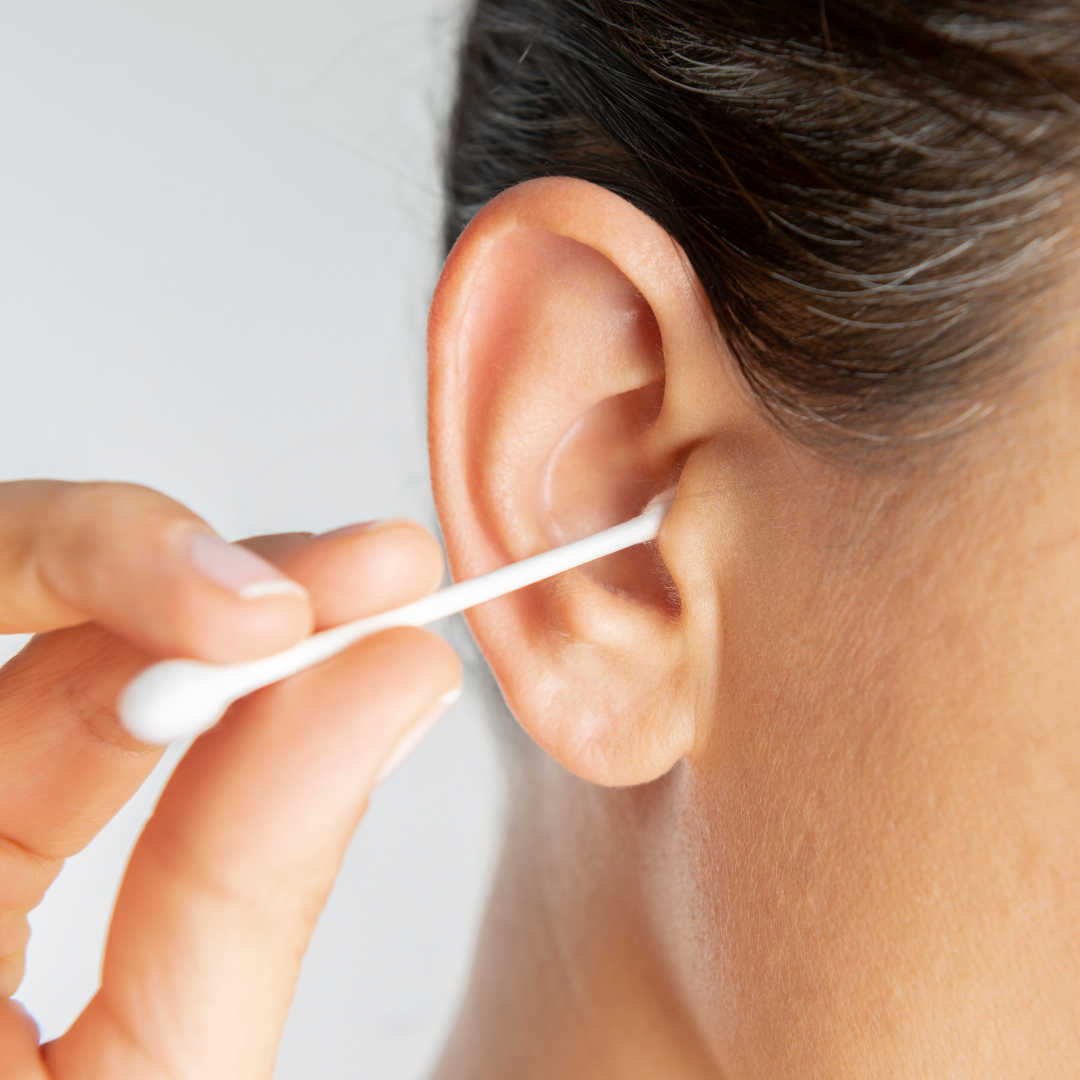
Although cotton swabs feel like accessible ear-care tools, introducing them into the canal hinders self-cleaning mechanisms and may harm your hearing. Our specialists determine if cerumen warrants clinical clearing and advise on targeted methods designed to protect your hearing health. Ears don’t always need manual cleaning; however, if wax builds up, we can help patients safely remove excess wax.
Why Are Q-Tips Bad for Your Ears?
Earwax, or cerumen, is not dirt. It traps dust and debris, helps limit bacterial growth, lubricates the ear canal, and protects its sensitive skin. Standard jaw mechanics and lateral skin shedding propel oxidized wax toward the outer meatus, allowing it to dry and wash away during daily washing.
Placing a cotton applicator inside the canal completely interrupts this automated self-clearing cycle. Even though the applicator collects minor residue, it typically drives the bulk of cerumen directly toward the delicate eardrum. Habitual use tends to compress wax into a stubborn plug, producing an uncomfortable blocked feeling that prompts further harmful scrubbing.
While cotton swabs are acceptable for cleansing the external folds of the pinna, they must never pass into the ear canal.
Types of Ear Injuries Caused by Cotton Swabs
Canal skin is thin, vascular, and highly vulnerable to mechanical abrasions. Minor physical scratches induce pain, trigger localized bleeding, and invite bacterial colonization, increasing outer ear infection rates. The cotton end can also dislodge from the applicator, creating a retained foreign body within the ear.
Clinically documented swab injuries include:
- Severe earwax impaction near the tympanic membrane
- Skin abrasions, tissue swelling, severe irritation, and active bleeding
- Pathogenic infection involving the ear canal
- Foreign matter or cotton material lodged in the ear
- Traumatic perforation of the eardrum
- Damage to the tiny acoustic middle-ear bones
- Transient or irreversible shifts in hearing thresholds
- Onset of tinnitus, positional dizziness, or acute ear pain
Even though major trauma is uncommon, someone bumping your arm, a sudden hand slip, or deep over-insertion can cause severe damage.
Recommended Schedules and Timelines for Cerumen Removal
Most people do not need to remove earwax on a schedule. Functional ear canals naturally evacuate wax, and everyday washing clears away deposits on the outer ear. Overzealous hygiene parches canal tissue, incites chronic irritation, and increases vulnerability to bacterial infection or deep plugs.
Extraction is medically indicated when cerumen fully occludes the lumen, blocks visual examination of the eardrum, compromises hearing aid function, or induces pain.
Safe Home Strategies for Managing Earwax
Whenever cerumen remains asymptomatic, avoiding manual intervention represents the safest course of action. Restrict hygiene to wiping the outer ear folds with a damp cloth while permitting the canal to self-evacuate.
When wax needs softening, we may recommend an over-the-counter cerumen-removal product or drops containing ingredients such as mineral oil, glycerin, saline, or carbamide peroxide. Follow the package directions meticulously regarding droplet quantity and consecutive days of use. Discontinue administration immediately if the solution sparks pain, severe dizziness, skin rash, or worsening ear fullness.
At-home ear flushing is not suitable for all ears and demands prior clinical verification and step-by-step guidance from a provider. Never utilize motorized oral irrigators or dental water devices in the ear canal. Avoid ear candles, metal scoops, camera-guided tools, hairpins, and home suction devices. Such unapproved devices easily burn canal walls, cut fragile skin, puncture the eardrum, or drive cerumen deeper.
Recognizing When Earwax Requires Clinical Intervention
Set up an audiological evaluation whenever your ear stays plugged after softening care, wax is firmly impacted, or home efforts fail repeatedly. Professional removal is also preferable when a person cannot safely hold still, has a narrow ear canal, uses hearing aids, or has medical or surgical factors that make drops or irrigation risky.
Request an immediate diagnostic examination for:
- Ear pain, persistent itching, or tenderness
- Blood, pus, clear fluid, or unpleasant-smelling drainage
- Fever or swelling around the ear
- Newly developing ringing in the ears or balance disturbances
- Sudden hearing drops or auditory deficits that remain after wax removal
- Any concern of a ruptured eardrum or detached cotton swab tip
- Repeated wax accumulation that impairs prescription hearing devices
Regard sudden unilateral hearing loss as a time-sensitive medical emergency instead of presuming it is earwax. Timely clinical evaluation distinguishes benign wax blockages from urgent inner ear pathologies requiring rapid steroid therapy.
How Healthcare Providers Extract Impacted Earwax
We first examine the canal with an otoscope or microscope to confirm that wax is present and look for infection, injury, or an eardrum perforation. Determining the safest intervention hinges on cerumen density, specific canal contours, past surgical interventions, and the patient’s procedural comfort.
Safe audiological extraction methods include:
- Medical-grade wax softeners administered prior to or during the procedure
- Safe low-pressure irrigation using body-temperature solutions on intact tympanic membranes
- Gentle micro-suction performed under clear binocular visualization
- Mechanical extraction using sterile ear loops, specialized curettes, or micro-forceps
Visual guidance empowers the clinician to protect delicate canal skin and pause immediately if sensitivity is detected. You may need more than one method for dry or tightly packed wax. Upon completing removal, the clinician performs a final inspection to confirm optimal canal and eardrum health. Should sensations of fullness, tinnitus, balance issues, or hearing loss persist, comprehensive diagnostic testing will isolate the true underlying etiology.
Request an Appointment for Clinical Earwax Removal
If you notice a blocked sensation or changes in auditory clarity, contact us for an evaluation rather than inserting a Q-Tip. During your consultation, we examine current symptoms, prior ear surgeries, hearing aid habits, home remedies, and physiological factors that drive wax accumulation. Connect with our practice today to reserve an appointment for safe, professional earwax removal.