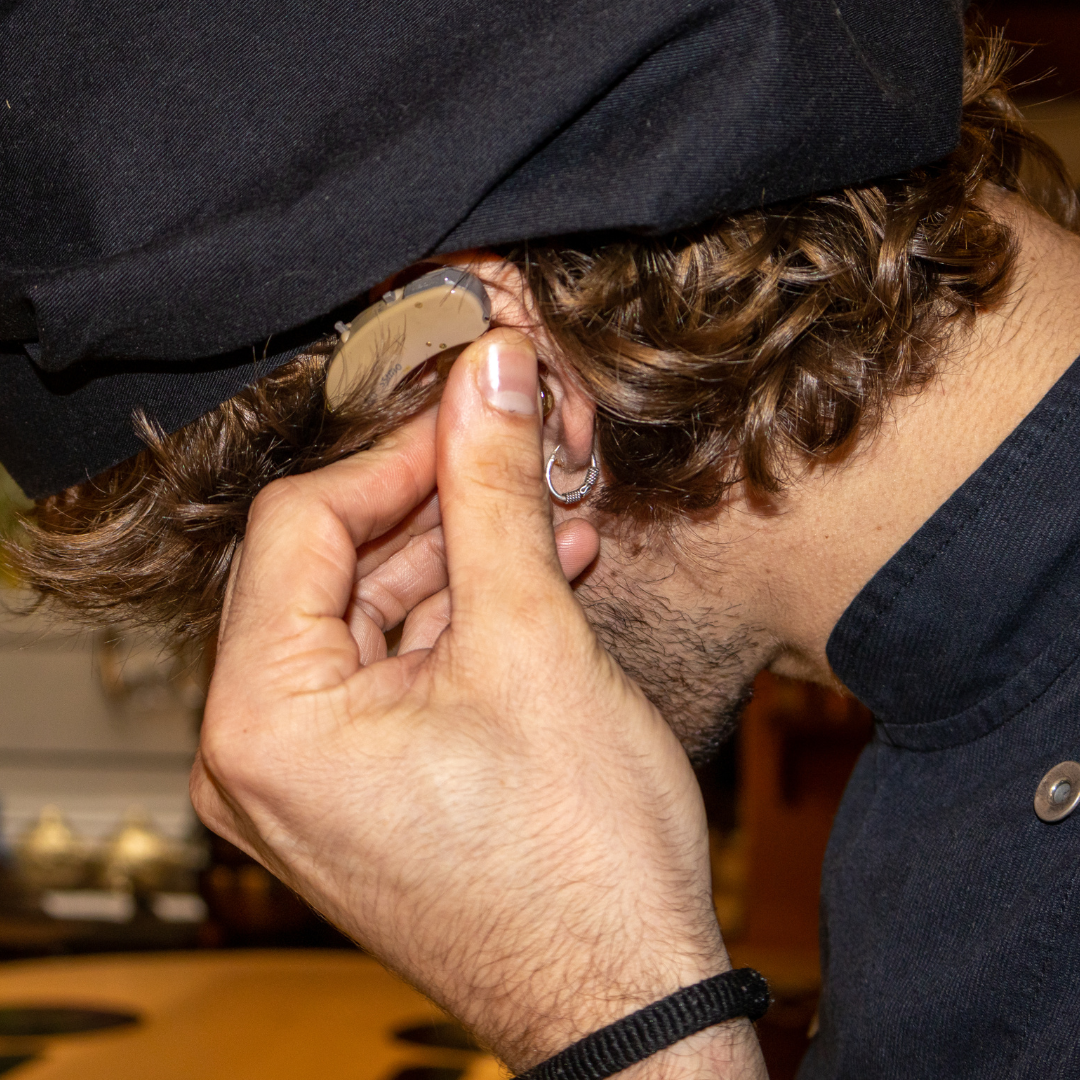
Tracking speech in busy dining venues can feel exhausting when environmental noise drowns out your hearing. Our practice provides targeted diagnostics to evaluate hearing in quiet atmospheres as well as complex noise environments. Once the diagnostic etiology of your difficult hearing is established, we implement personalized clinical and technological strategies.
How Can Hearing Seem Normal at Home but Fail in a Restaurant?
Quiet rooms provide a favorable signal-to-noise ratio, meaning a speaker’s voice is much clearer than the sounds around it. Dining venues establish an entirely contrary auditory challenge. Layered diner voices, kitchen activity, foreground music, and room reverberation muddy speech signals, requiring intense mental strain to follow dialogue.
Such listening challenges typically stem from high-frequency hearing loss, auditory-processing deficits, or accumulated noise-induced trauma. Attention, fatigue, dim lighting, and distance from the speaker may make it worse. Certain patients demonstrate normal sensitivity on routine audiograms while struggling significantly during advanced speech-in-noise testing. Experiencing speech-recognition struggles in noisy dining venues warrants a formal audiological evaluation regardless of seemingly normal quiet hearing.
How Is High-Frequency Hearing Loss Diagnosed?
Our diagnostic process starts with a detailed case history reviewing problematic listening scenarios, occupational noise exposure, tinnitus, ototoxic medications, and familial genetics.
Standard pure-tone audiometry gauges the lowest volume thresholds detectable across varying acoustic frequencies via specialized earphones and bone oscillators. A clinical presentation of high-frequency loss produces a downward-sloping audiogram where auditory thresholds worsen significantly at higher frequencies. Comprehensive evaluations frequently include impedance tympanometry to examine middle-ear function and recorded word-recognition testing to measure speech understanding.
Since sound-treated booths cannot replicate the chaos of a crowded dining room, speech-in-noise testing provides critical real-world insight. It calculates your ability to identify verbal phrases as competing background noise levels rise. Together, these results show whether the problem involves audibility, speech clarity, background-noise processing, or a combination of factors.
Auditory Processing Disorders: Impact on Adult Communication
Auditory processing disorders interfere with the brain’s ability to process and decipher acoustic signals arriving from the ears. The peripheral auditory system may register sounds within normal limits, yet the brain falters when separating competing acoustic inputs, sorting speech sounds, or tracking fast speech. Our clinical team starts by examining peripheral auditory thresholds, subsequently deciding if an auditory-processing test battery or multidisciplinary consultation is necessary.
Effective Techniques to Hear Better in Noisy Surroundings
Strategic behavioral modifications can substantially improve the auditory signal reaching your ears while maximizing supportive visual cues. Prior to dining, choose venues known for lower noise levels or schedule meals during quieter dining hours. Dining locations utilizing sound-absorbing elements like booths, felt panels, window curtains, and carpet offer better acoustics than high-ceilinged rooms with hard surfaces.
Upon entering the restaurant:
- Ask for seating positioned far away from open kitchens, noisy bar areas, ceiling speakers, and large parties.
- Choose a seat with your back against a solid wall to block acoustic clutter originating from behind.
- Ensure you sit directly across from speaking partners in an area with sufficient illumination for visual lip-reading.
- Keep conversational proximity as close as comfortably feasible to preserve acoustic signal strength.
- Place your better-hearing ear toward the person you most want to hear.
- Ask the speaker to rephrase the missed portion instead of repeating everything.
- Explicitly repeat back important logistical details instead of pretending you caught every word.
- Step away for a brief auditory rest when cognitive listening fatigue begins to set in.
- Request that dining partners articulate words distinctly at an unhurried, natural speed.
- Speaking with excessive volume creates acoustic distortion that fails to make words clearer.
Assistive Listening Technologies for Noisy Environments
Choosing the most effective auditory device requires evaluating diagnostic findings, acoustic lifestyle factors, and the presence of hearing loss. Customized hearing aids employ directional microphone beamforming, noise cancellation algorithms, and targeted dining programs to prioritize speakers in front while lowering ambient noise. Realistic expectations are vital, since even advanced hearing devices cannot completely erase background conversational chatter.
Incorporating a dedicated remote microphone provides an even more pronounced improvement in signal-to-noise ratio. Worn on the speaker’s collar or set on the table, the microphone broadcasts direct audio to paired hearing aids or specialized receivers. This targeted setup effectively neutralizes the negative impacts of room distance and interfering background noise.
Additional effective assistive technologies include:
- Wireless conference table microphones that capture multi-speaker discussions
- Built-in telecoils linking directly with induction hearing-loop systems in public venues
- Mobile phone live-transcription apps offering real-time conversational subtitles
- Consumer wireless earbuds or hearables featuring customizable assistive listening modes
- Sound-level or restaurant-review tools for finding quieter locations
We analyze suitable devices, verify functional compatibility with your current setup, and guide you through real-world operation.
How Medical and Audiology Specialists Resolve Hearing in Noise
A comprehensive hearing evaluation looks far beyond the common misconception of “I hear fine in quiet environments.” Our clinicians review the specific environments, vocal pitches, and decibel levels that trigger breakdowns to design a personalized test protocol. Clinical evaluation commonly integrates pure-tone audiometric testing, middle-ear analysis, word recognition, and speech-in-noise measures. Specialized auditory-processing testing can be ordered when patient history and preliminary audiometric findings warrant deeper neural investigation.
Any sudden, asymmetric, or rapidly deteriorating hearing loss demands immediate medical evaluation by an ear, nose, and throat physician. Personalized care identifies the source of the difficulty rather than assuming restaurant noise is the only problem.
Request an Audiology and Hearing Evaluation Today
If struggling through dinner conversation leaves you mentally exhausted, detached, or constantly guessing, schedule a complete hearing evaluation with our clinic. We will help you navigate hearing in noisy environments by implementing advanced hearing aid options, assistive accessories, or therapeutic auditory strategies tailored to your lifestyle.
Reach out to our audiology clinic today to schedule an evaluation and begin enjoying clear, effortless conversations.